
When people mention Bram Stoker’s Dracula, two things are likely to come up: Keanu Reeves’ accent, and that the movie was a critical and commercial dud. We’ll get to the accent thing a little later, but first I have to settle my beef with the “dud” part.
Contrary to a lot of online perception about Coppola’s 1992 film, it did not tank at the box office — it made $215,000,000 at the box office worldwide against a $40 million budget, making it the ninth highest-grossing film of that year. It won three Academy Awards (Best Sound Editing, Best Makeup, and the spectacularly earned Best Costume Design) and was nominated for Best Art Direction.

What I suspect might trip some people up in their recollection is Dracula’s lukewarm reception from critics — Roger Ebert rated it a respectable if not enthusiastic three stars, mentioning it was “faced with narrative confusions and dead ends,” and describing it as “an exercise in feverish excess” (although not altogether in a derogatory manner). Geoffrey O’Brien of the New York Review of Books called it “little more than a marketing device designed to exploit the attractiveness of the movie’s youthful cast.” Other critics called it confusing, muddled, and bloated.
Online discussion (to the shock of absolutely no one) is even more polarized, with people either hailing Bram Stoker’s Dracula as a masterpiece, or dismissing it as a hapless farrago, a misstep on par with Jack or The Rainmaker. Well, I am here do some masterpiece-hailing, because Dracula is absolutely my shit: weird, divisive, colorful, and completely unashamed. Dracula dives fully into its operatic lavishness and never lets go — no wry quips or ironically detached dialogue here; Dracula means what it says, including — especially — the bits that are over the top or even goofy.
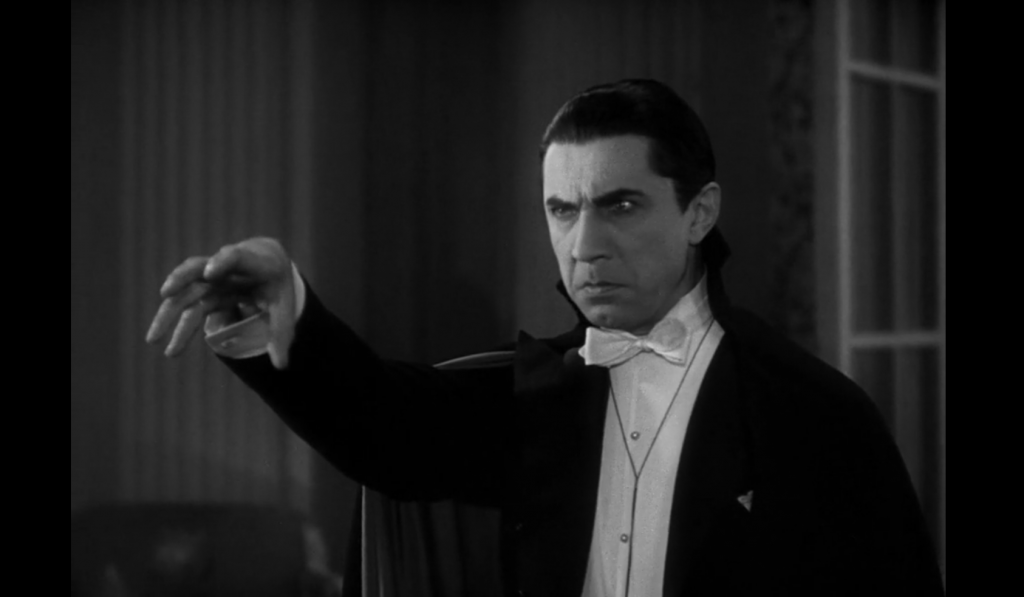
Calling a movie a “game-changer” is terminally overused and rightfully comes off as facile a lot of the time, but in the case of Bram Stoker’s Dracula I think it happens to be true. Let’s start with the wardrobe, for instance. The late Eiko Ishioka brought her legendary skills to the movie’s costume design — Eiko’s designs are often synonymous with “visually stunning,” having appeared in (and transformed) movies like The Cell and The Fall. (Eiko also won a Grammy for her design of Miles Davis’ Tutu album cover.) While Eiko’s designs were not the first to liberate the character of Dracula from the black cape that had served him since the days of Bela Lugosi, no one has ever done so with as much boldness and ambition. Vlad Dracul first appears in Coppola’s film resplendent in breathtaking red armor (the “Devil’s Armor” as it was generally referred to). From Prince Vlad in blue-tinted John Lennon glasses to Lucy Westrena’s ghoulish funerary attire, Bram Stoker’s Dracula asserts its own garish visual milieu.
The movie’s boldness doesn’t end with the costume and set design, though — the prologue lets you know right away what kind of tone and energy you’re in for. Vlad Dracul returns from battle to find his beloved Elisabeta has committed suicide, fooled into thinking he was slain by his enemies. As he weeps over her corpse, a priest (hey, that’s Anthony Hopkins!) tells him Elisabeta is damned to Hell for having taken her own life. Consumed with rage, Dracul vows he will rise from the dead to avenge his lost love “with all the powers of darkness.” He stabs the cross above the church’s altar and drinks the blood that weeps from it. As the blood washes over the body of his dead love, Dracul screams and drifts out of frame in a fall that’s simultaneously literal and symbolic.
And then, you know, the story begins.
Coppola’s film isn’t remotely satisfied with just one vision of Count Dracula. He’s an armored Romanian avenger, a lavishly dressed recluse, a dashing prince, a withered revenant, a hulking demonic bat-creature, a horny werewolf, not to mention a glowing, green mist that killed Tom Waits and got frisky with Mina Harker under the covers. He walks in the daylight and blends in perfectly with the populace of London. This man’s got it all.
Coppola’s Dracula is not to be limited or defined by the lore that surrounds him. His appearance is as mercurial as his temper; from soft and genteel when he’s around Mina Harker, to bestial and remorseless when facing his enemies. Coppola’s Dracula wasn’t the first to break convention and toy with our assumptions about how the archetypal Count should dress and act, but few if any films have done it quite so thoroughly.
It’s the way Bram Stoker’s Dracula both embraces and defies tradition with focused intent that makes me love it as much as I do. In open rebellion against tradition, we see Anthony Hopkins as a manic and mystical Van Helsing who speaks in flowery riddles and teleports as a rhetorical flourish. Keanu Reeves’ unconventional casting as Jonathan Harker was met with scorn (we’ll get to that). The entire tone of the film is dreamy and phantasmagorical, full of inexplicable events and baffling imagery, and very rarely does anyone stop to explain a damn thing. The vampire himself is more than just a fanged menace: Coppola decided during production that the very laws of physics wouldn’t function as normal near the titular Count: shadows move on their own, mirrors crack, crosses melt, rats run across the ceilings. Dracula is an aberration, a sin against nature, a Thing That Must Not Be, and so reality itself warps and rebels in his presence.
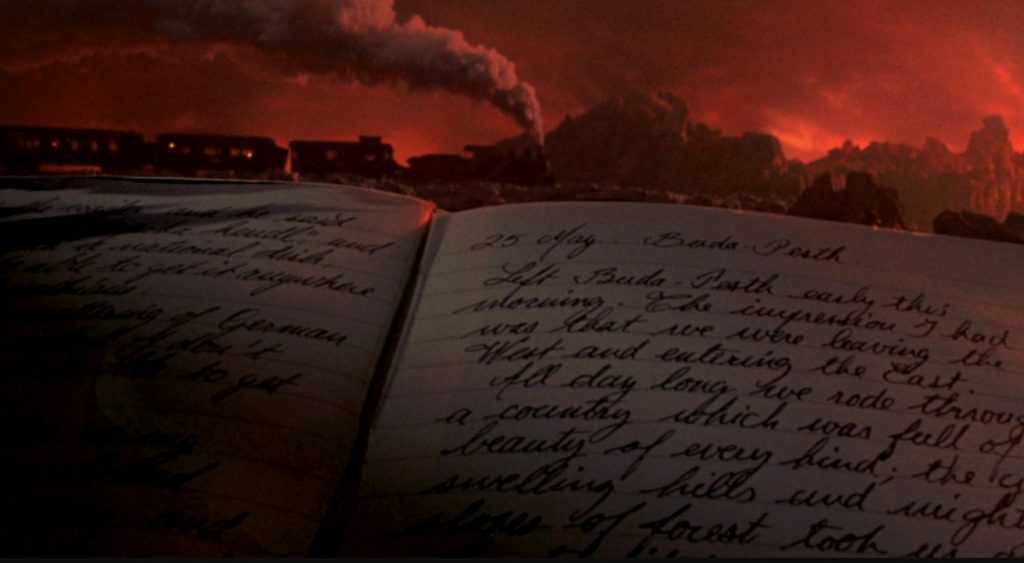
But at the same time, Bram Stoker’s Dracula is willfully atavistic: Coppola eschewed digital effects in favor of practical and in-camera techniques, to the point where he fired his visual effects team (who told him it couldn’t be done) and hired on his son Roman to do the job. There is no digital wizardry at work in Dracula — instead of compositing, there’s rear projection; instead of CG, there are in-camera effects, miniatures, matte paintings, and forced perspective.
Because the movie is set in a time period where film was just coming into its own, Coppola wanted to focus on techniques that were in use at the time. When storyboarding the film (which spanned over a thousand images), Coppola drew from the imagery of Jean Cocteau and Gustav Klimt, and showed his production designers art from symbolist painters of the 1890s. He deliberately told the designers to “think weird” and to take their imagery either from research, or “their own nightmares.” In his pursuit of venerated film techniques, his son Roman found an old hand-cranked Pathé camera from 1905, which they put to use in the movie. Coppola set out to make a movie full of magic; in his own words, “an erotic dream.”
It’s this intentionality that sets Bram Stoker’s Dracula apart from all others. It’s not particularly interested in a traditional pace or narrative; it doesn’t want to bank on the same movie imagery that’s surrounded Dracula for decades. It wants to surround you with something entirely new; to see you borne along by the chimerical tide until you drown in it. Though the scene was later truncated, Coppola sought to make that immersion all but literal; in the prologue, when the blood pours from the cross over Elisabeta’s body, there was originally so much blood that Winona Ryder was completely submerged in it, as he wanted the audience likewise submerged.
It’s this devotion to weirdness and excess that endears some viewers (me), and alienates others. Recently, a critic on Twitter (whose name I won’t mention because I immediately blocked him out of petty spite) seemed frustrated with the frequently inexplicable nature of the movie: why is Dracula a werewolf? How can Van Helsing teleport? Why is everything so goddamn weird? Reasonable questions for a largely unreasonable film. Bram Stoker’s Dracula moves like a dark surrealist opera: Jonathan and Mina kiss passionately in a Romanian church as, back in England, Lucy Westrena’s bedroom explodes in a tidal wave of blood with a scream of mortal agony. The scene cuts back to Jonathan and Mina, the score building to a frenzied pitch before cutting to blackness, juxtaposing their union with the specter of violent death, with the promise of more to come.
Is it wildly gratuitous and nonsensical and over the top? Probably, and if that’s the way you feel, I don’t judge you. But wild excess and gratuity that doesn’t make sense is something I adore in horror when it’s done well. Give me the unapologetically dramatic, the surreal, the unexplained. Shoot it right into my fucking eyeballs.
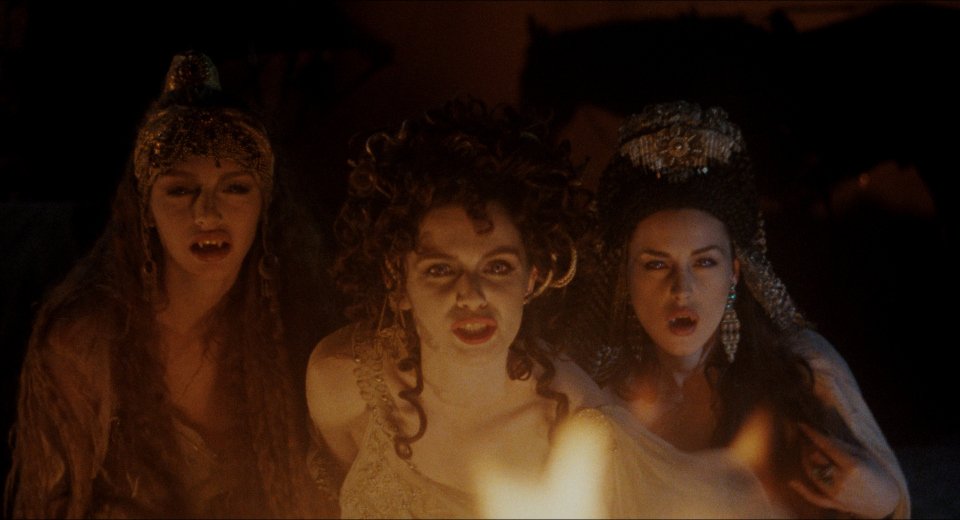
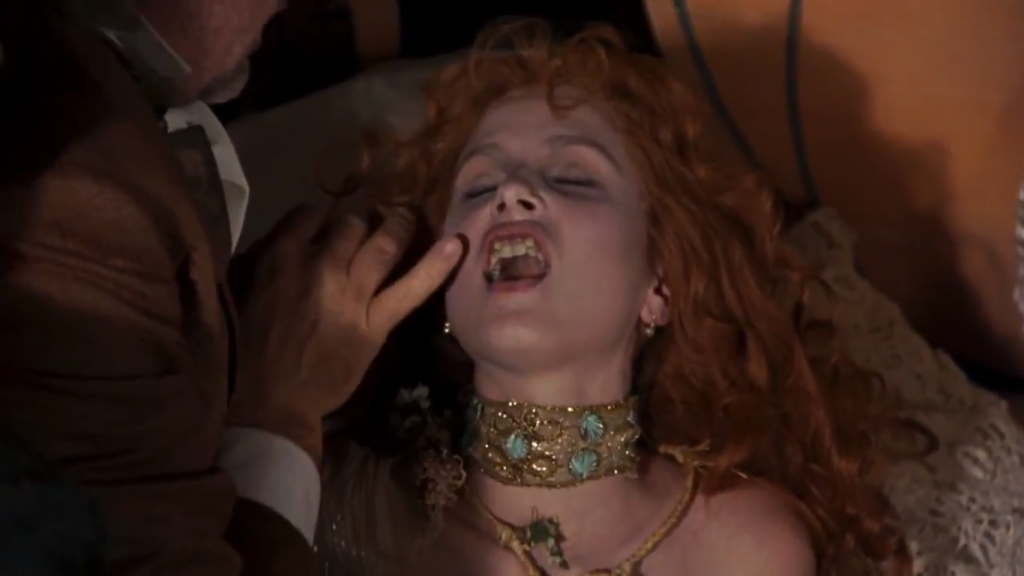
While we’re on the subject, I’d like to take a moment to talk about the “erotic” part of Coppola’s erotic dream. It’s no secret that we’re going through one of the least horny periods in mainstream cinema, with gorgeous but antiseptic superheroes currently dominating the landscape, and even long-standing horror franchises opting for installments rated PG-13. But even in 1992, the reportedly shocking sexual content in Bram Stoker’s Dracula was either creating buzz, contributing to rumors that Coppola’s “Bonfire of the Vampires” would be a colossal flop, or both. And if you dislike “unnecessary” sex in films, then Dracula could hardly be less appealing. Lucy Westrena is ravished by a were-beast in a rainy courtyard; nude vampire brides caress and fellate Jonathan Harker with fangs bared; Mina and Lucy kiss passionately in rain-drenched nightgowns, either under Dracula’s fell influence or just girls being pals. Sheer gratuity everywhere you look. While shooting, Coppola reportedly asked Gary Oldman to whisper provocative things in Sadie Frost’s ear to help her embrace the moment; Frost later recollects his words as “highly unrepeatable.” Obviously this is far from the first time film directors have cranked up the sexuality of the source material, but Dracula does so with an operatic ferocity that inspires an undying love in me.
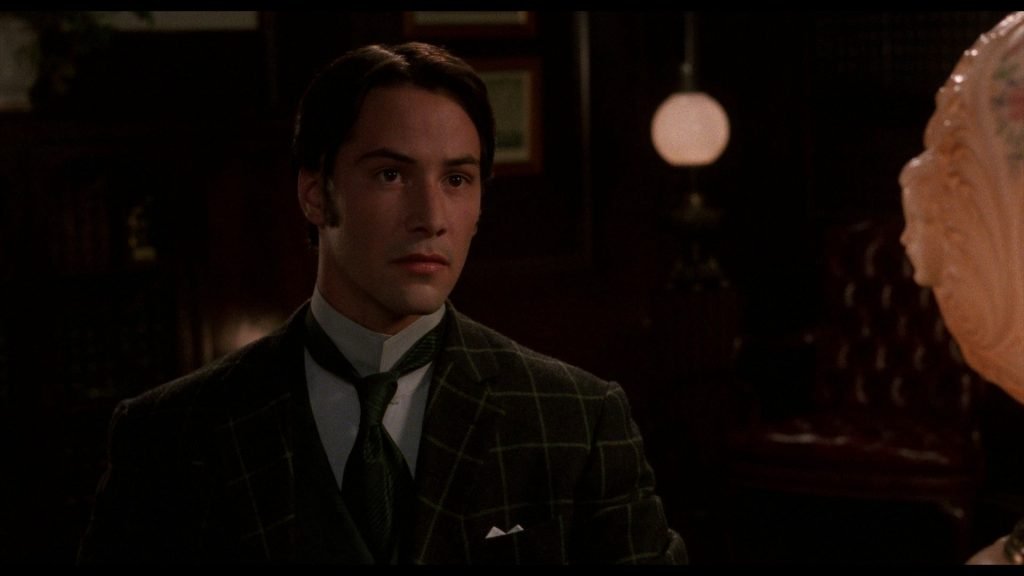
Speaking of love, room has to be made for the characters and performances, without which the most spectacular visual effects would be all but meaningless (I’m glaring in your direction, Hollywood of 2015 onward). The actors play their roles with aplomb — yes, even Keanu Reeves and his much-maligned accent. By Coppola’s account, Keanu — who was freshly struggling to banish his public image as the Duke of Ted — labored so hard on getting the accent right that he inadvertently made it worse, his delivery too stiff and self-conscious. Critics went for his neck upon the film’s release, snidely proclaiming Keanu perpetually looked like he was about to end all his sentences with “dude.” But for me, Keanu’s uptight delivery is perfectly suited for the repressed era in which Dracula is set — during his time in Dracula’s castle in particular, he remains proper and composed in the face of increasingly bizarre events, trying his hardest to be polite while reality cracks all around him and the Count casually imprisons him. When his decorum finally snaps as he witnesses the Count’s vampire brides feast on an infant, his look of unbelieving despair has that much more impact. Even after he musters the courage to escape the baleful ministrations of the vampire brides (oh no, Monica Bellucci, please don’t suck my blood and feed on me oh no), Harker never rises far above the role of hapless Victorian dope.
While some performances are, let’s say, more exuberant than others, everyone brings their A-game. Certainly no one could say that Gary Oldman held anything back. But you wouldn’t know it from watching him work: Oldman plays Vlad Dracul seven or eight different ways, and buries the needle on all of them, from a gloating, murderous ghoul to a wizened and wry old hermit, smirking as he says “I never drink… wine” and “a man of good…taste” — the cream of the crop in Transylvanian dad jokes. He’s on record as later saying he would think twice about doing another horror movie like Dracula, because it was very difficult “trying to act through all that rubber.”
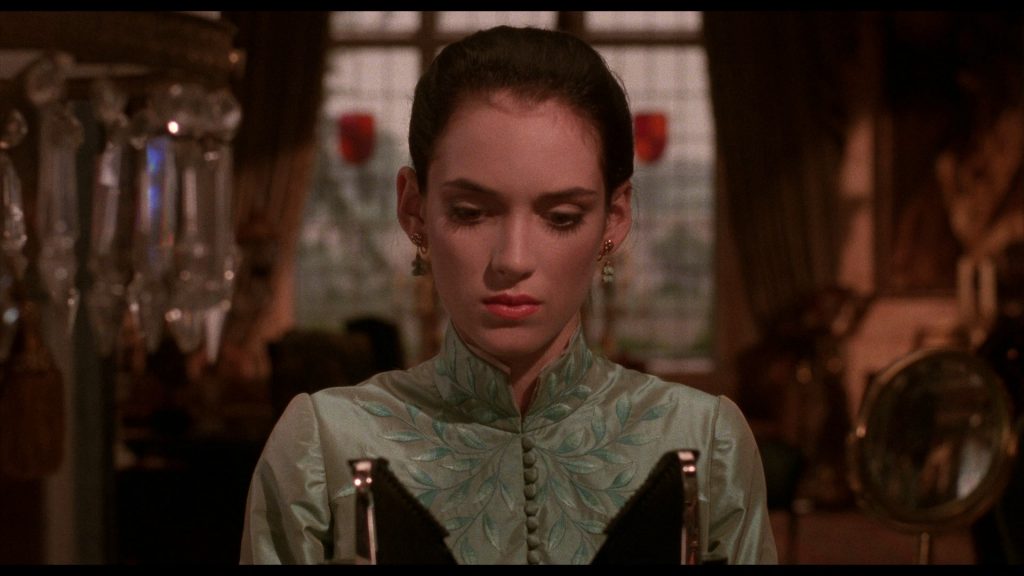
Anthony Hopkins’ manic, eccentric Van Helsing is the closest the movie comes to winking at the story’s fundamental absurdity — the darkly hilarious moment at Lucy’s funeral where he casually mentions driving a stake through her heart and cutting off her head is perhaps the movie’s one sly nudge to the audience. Winona Ryder, who also took flak for her accent and apparently suffered through multiple terrors on set (being deathly afraid of both fire and rats), transforms from a girl with the same demure, prudish attitude as her beau (“can man and woman really do…that?“”) to a woman who is ready to surrender herself entirely to the beast, her soul be damned. Billy Campbell as Quincey Morris has my favorite line in the entire movie (“well, you’re a sick old buzzard!”), and there was no way Tom Waits as Renfield was going to be anything other than a fucking delight — condescendingly explaining to Dr. Seward that the plateful of bugs he’s holding is “actually perfectly nutritious.” Alas that he was no match for pissed-off green fog.
Bram Stoker’s Dracula came along at a time when my horror tastes were really starting to take shape. Slashers have never interested me all that much, and while I have a lot of love for creature features, it’s the weird, surreal stuff that swings for the fences that really speaks to me. I often tend to think of the 90s as a rather arid time for my kind of horror, populated by slashers like Scream or Halloween H20 or Jason Goes to Hell and goofy fare like the Leprechaun movies. But a lot of my favorite horror movies came out of that decade: Exorcist III, Jacob’s Ladder, Nightbreed, William Friedkin’s underrated The Guardian, and what I consider Joel Schumacher’s best film, Flatliners. (I’m going to write a whole post on Flatliners at some point; I will fight people in the streets about that movie.)
Of these, Coppola’s movie was among those that fired my imagination most — not stories of encountering homicidal maniacs or ghostly terrors (although I do love me a ghostly terror), but deep dives into another world, just adjacent to ours, but suffused with the unlikely and unexplainable. Coppola’s Dracula never seems to me that it takes place in the 1890s of our world. From the first shot, it nudges the viewer into a nearby poetic reality, where events bleed into one another in one long, beautiful fever dream. There are plenty of direct, conventional takes on Count Dracula that don’t bring nearly so much excess and delirium to the screen — but to me, that’s where the magic is.